In recent years, the way people interact with restaurants has changed clearly. Customers no longer only wait to sit at a table and receive a traditional paper menu. Today, they look for an experience that is faster, clearer, and easier. With the spread of smartphones and the digital transformation of many services, the digital menu has become one of the most important tools for any restaurant that wants to keep up with the present and offer a better experience to its customers.
A digital menu is no longer just an online copy of a food list. It has become an essential part of the restaurant’s identity and marketing experience. It is often the first interface through which the customer sees the dishes, prices, images, offers, and the way the restaurant presents itself. For this reason, the digital menu today is not a small extra feature. It is an important element in the success of restaurants, especially with strong competition and changing customer behavior.
What Is a Digital Menu?
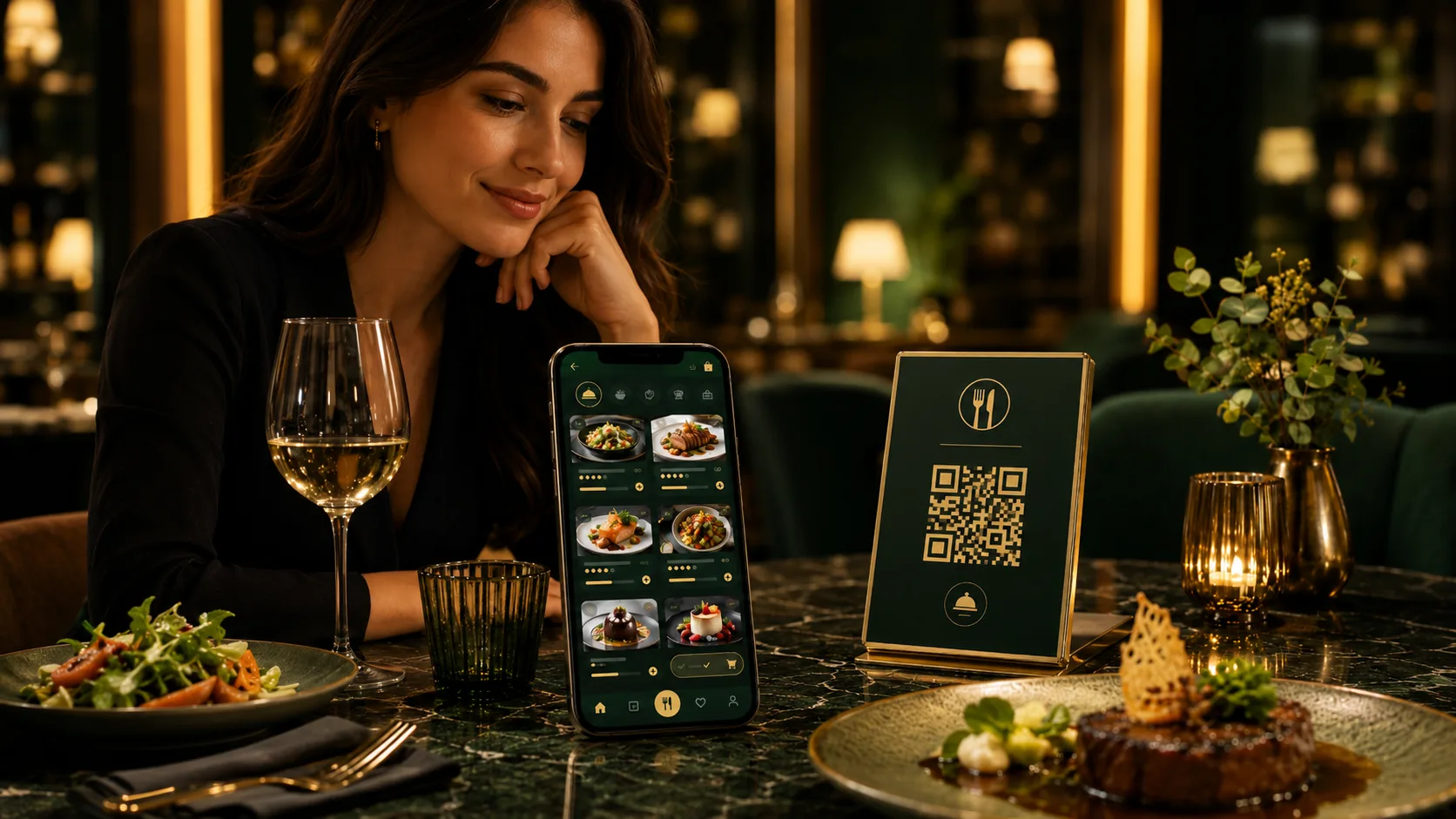
A digital menu is an online food menu that customers can access through their phones, usually by scanning a QR code placed on the table, at the restaurant entrance, or on the restaurant’s social media posts. After scanning the code, the menu opens directly on the phone screen. The customer can browse the items, read the details, view photos, check prices, and sometimes place an order directly if the system supports this feature.
But the most important point is that a professional digital menu is not just a PDF file or an image of the paper menu. A good digital menu is an interactive and easy-to-use page, designed to match the restaurant’s identity. The restaurant owner can update it at any time without printing new menus or replacing old ones.
This is where its real value appears.
A Faster and Easier Experience for Customers
The first thing customers look for today is comfort. When they enter a restaurant, they want to see the items quickly, understand the options easily, and decide what suits them without confusion. A digital menu helps them do that because it places the full menu in their hands in a clear and organized way.
Instead of waiting for the waiter to bring the menu, or waiting until a menu becomes available, the customer can open it within seconds. If the digital menu is well designed, they can move easily between sections such as appetizers, main meals, drinks, desserts, offers, and featured dishes.
This speed does not only help the customer. It also helps the restaurant. When customers find what they want quickly, the decision becomes easier, the ordering process becomes faster, and the pressure on staff becomes lighter, especially during busy hours.
Updating Prices and Items Without Printing Again
One of the biggest problems with paper menus is that they need to be printed again whenever prices change, a new item is added, or an unavailable item is removed. This creates extra cost, takes time, and may cause confusion if some old copies are still being used inside the restaurant.
A digital menu solves this problem directly. The restaurant owner can change a price, add a new photo, remove an unavailable dish, or add a special offer within minutes. This is very important in the restaurant sector, because prices, ingredients, and availability can change constantly.
For example, if a certain dish runs out during the day, it can be hidden from the menu immediately so customers do not order it. If the restaurant wants to launch a one-day offer, it can add it easily without printing costs or delays.
Reducing Costs in the Long Term
Some restaurant owners may think that a digital menu is an additional cost. In reality, it can help reduce costs over time. Instead of printing new menus again and again, the restaurant can rely on a digital version that can be edited at any moment.
Printing costs are not always simple, especially if the restaurant cares about paper quality, lamination, design, or needs a large number of copies. With every change in prices or items, the restaurant returns to the same cycle: design, review, printing, and distribution.
The digital menu shortens this whole process. The system or page is built once, and after that, updates become easier, faster, and less expensive.
Presenting Dishes in a More Attractive Way
A paper menu is limited. The space is small, photos are not always clear, and sometimes the restaurant has to remove important details so the menu does not look crowded. A digital menu gives more space to present dishes in an attractive and organized way.
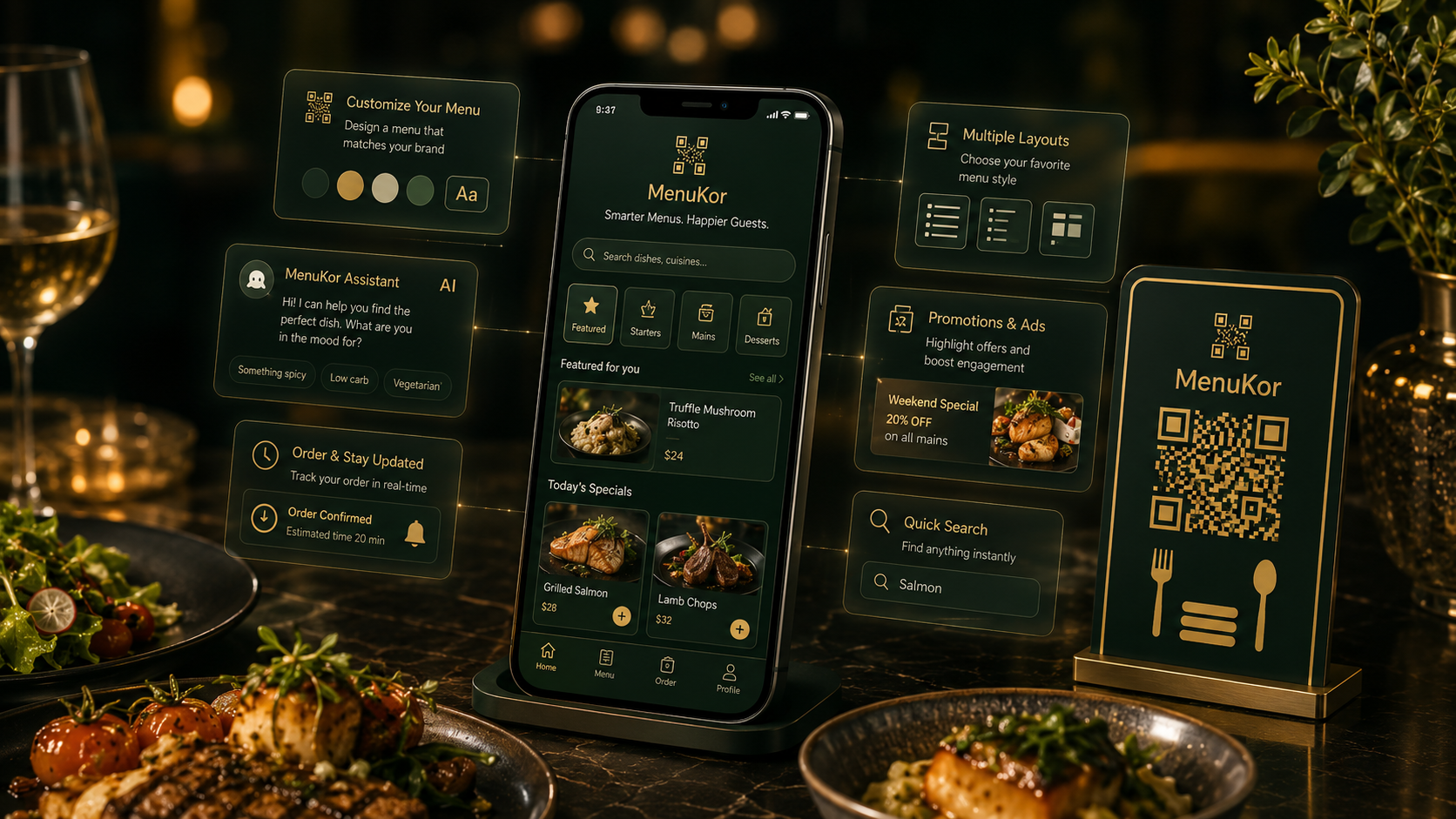
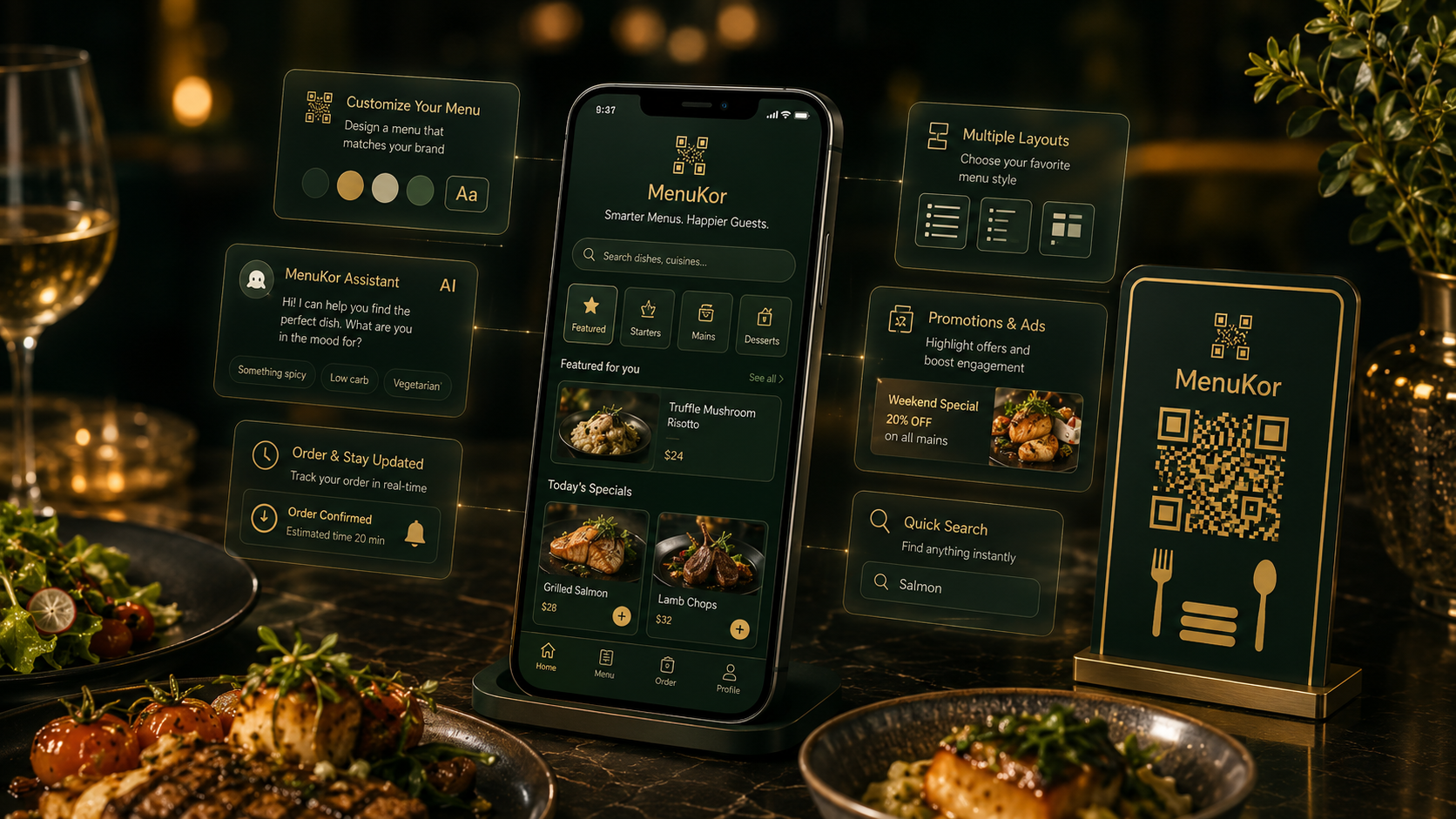
The restaurant can add high-quality images, descriptions for each item, calories, preparation time, ingredients, spice level, best-selling items, and special offers. All these details help the customer choose with more confidence.
Images are very important here. Many customers choose food based on how it looks, not only based on the name. When customers see a clear and beautiful photo of a dish, they are more likely to order it, especially if it is new or unfamiliar to them.
Improving the Restaurant’s Image
First impressions matter. When customers enter a restaurant and find a clean, fast, well-designed digital menu with clear photos, they feel that the restaurant pays attention to details. This strengthens the restaurant’s image in their minds.
A restaurant that uses modern tools appears more professional and organized. Even if the restaurant is small, an elegant digital menu can give it a stronger presence and make it look more developed in front of customers.
On the other hand, an old, damaged, or outdated paper menu can leave a negative impression. This does not necessarily mean the food is bad, but visual and organizational details affect the customer’s experience and judgment of the place.
Reducing Mistakes in Orders
In some restaurants, many mistakes happen because of misunderstanding between the customer and the waiter, unclear item names, or because the customer did not know the details of the dish before ordering. A digital menu helps reduce these mistakes.
When each item is explained with a photo, description, price, and ingredients, the customer understands better what they are ordering. If the menu includes an ordering system, the customer can choose the items and send the order directly, which reduces the chance of forgetting something or transferring the order incorrectly.
This does not mean replacing the staff. It means helping them. The waiter can focus more on service, guidance, welcoming customers, and solving problems instead of repeatedly explaining every detail from the beginning.
Supporting Marketing and Increasing Sales
A digital menu is not only a display tool. It can also be a strong marketing tool. Through it, the restaurant can highlight the most profitable items, promote new meals, create a section for special offers, or add a slider for featured dishes.
These details affect the customer’s decision. When customers see a section called “Best Sellers,” “Chef’s Choice,” or “Today’s Offer,” they may go directly to these options. This helps the restaurant guide orders toward certain items and increase sales in a smart and indirect way.
The menu can also be linked to the restaurant’s social media accounts, contact buttons, review links, or messages that encourage customers to share their experience. In this way, the digital menu becomes part of the marketing system, not just a food list.
More Suitable for the Digital Age
Today’s customers are used to using their phones for almost everything: ordering, payment, reviews, search, booking, and viewing photos. So it is natural for them to expect a digital experience inside restaurants too.
The digital menu fits this behavior. The customer does not need to download an app or follow complicated steps. They only scan a QR code and open the menu. This simplicity is one of the main reasons digital menus have spread quickly in restaurants and cafés.
Younger generations especially prefer speed and interaction. They want to see photos, compare prices, know the ingredients, and make their own decisions. A digital menu gives them this freedom.
Easy to Share Outside the Restaurant
One of the most important benefits of a digital menu is that it does not stay inside the restaurant only. It can be shared through WhatsApp, Facebook, Instagram, Google Maps, or any other platform. This means customers can browse the menu before they arrive.
This feature is very important because many people decide to visit a restaurant after checking its menu, prices, and photos. If the menu is clear and attractive, it may encourage them to come. But if they cannot find a clear menu, they may simply move to another restaurant.
Having a direct menu link gives the restaurant a stronger digital presence and makes the customer experience start before they even enter the place.
More Flexibility in Managing Offers and Occasions
Restaurants always need renewal: Ramadan offers, family meals, lunch deals, weekend discounts, seasonal dishes, or special occasions. A paper menu makes managing these things difficult and expensive, while a digital menu makes them very easy.
The restaurant can create a special section for offers, show an ad inside the menu, or highlight a certain item for a limited time. After the offer ends, it can be removed or edited easily. This flexibility gives the restaurant a better ability to respond to seasons, demand, and customer behavior.
It also helps the restaurant test new ideas. A certain offer can be tried, customer interaction can be observed, and then the offer can be changed or improved based on the results.
Improving Internal Restaurant Organization
The digital menu does not only serve the customer. It can also help management. When items are organized digitally, it becomes easier to follow what is available, what needs updating, and what should be improved.
If the menu is connected to an ordering system or notifications, it can help organize work between the dining area and the kitchen. Orders arrive more clearly, staff can follow them faster, and customers feel that the service is more professional.
This type of organization is very important for restaurants that want to grow or improve service quality. The clearer the process becomes, the less confusion there is, and the easier it becomes to manage pressure.
Does the Digital Menu Replace the Paper Menu?
Not necessarily. Some restaurants may choose to keep a simple paper version for some customers, especially older customers or people who do not prefer using phones. But the general direction today is to make the digital menu the main option, while keeping alternatives when needed.
It is better not to see the digital menu as a strict replacement, but as a development tool. A restaurant can use it to improve the experience, reduce costs, present items better, and organize orders, while still remaining flexible with all types of customers.
The Digital Menu Is Part of the Restaurant’s Identity
Design is very important here. Not every digital menu is successful just because it is digital. If it is slow, messy, hard to use, or does not match the restaurant’s colors and identity, it may give the opposite result.
A good digital menu should be fast, responsive on all screens, clear in its sections, easy to update, and beautiful in the way it presents items. It should also reflect the restaurant’s personality. A luxury restaurant needs a different design from a youth café. A traditional restaurant needs a different style from a healthy food restaurant or a fast-food restaurant.
For this reason, the importance of a digital menu is not only in having one, but in how it is designed and how the customer experiences it.
Conclusion
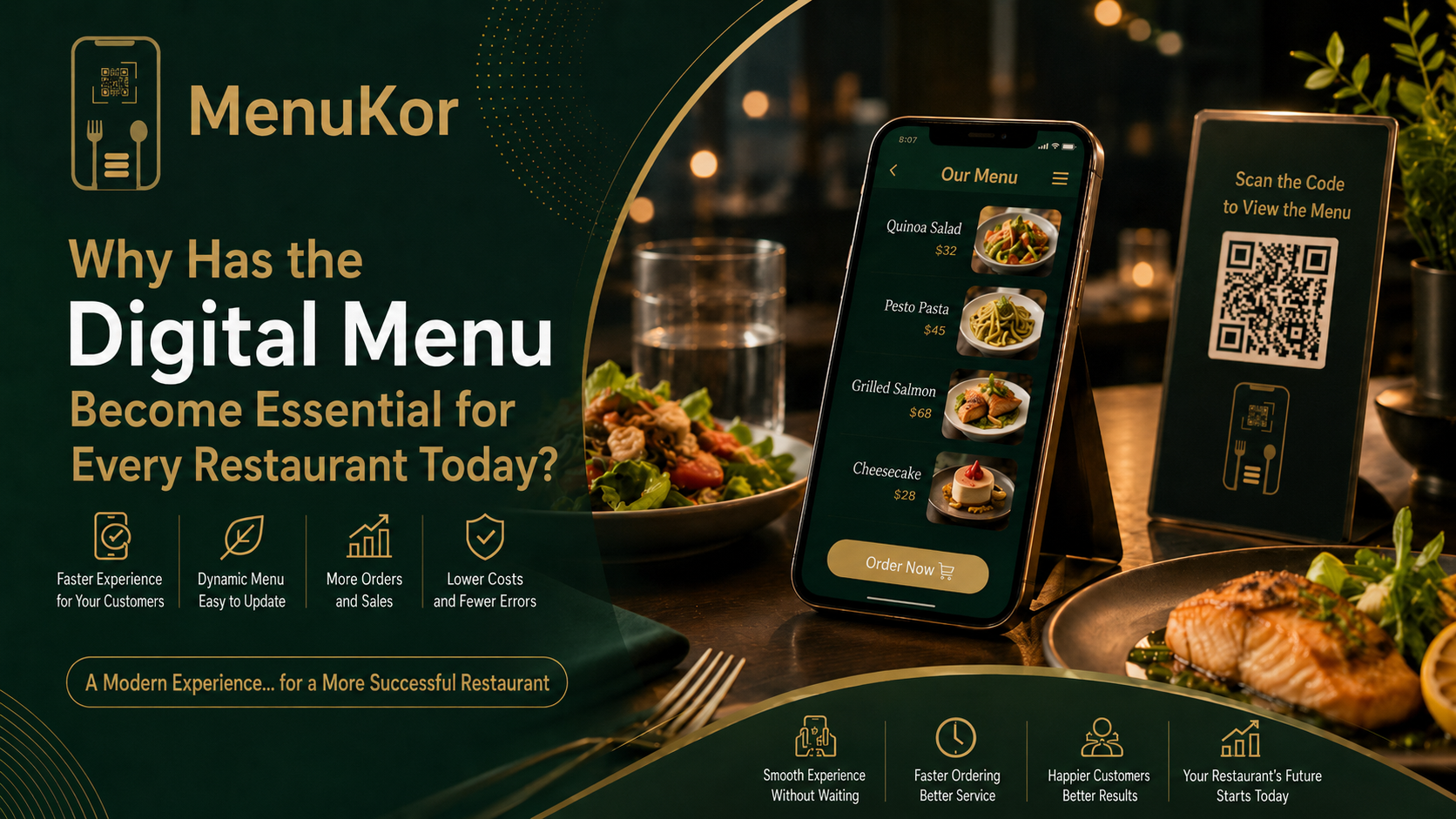
The digital menu has become a necessity for restaurants that want to offer a better experience and stay close to modern customer behavior. It helps speed up ordering, reduce costs, update prices easily, present dishes more beautifully, support marketing, and reduce mistakes.
But its real value appears when it is designed professionally. It should not be just a normal list of items. It should be part of the restaurant’s experience and identity. The customer does not only see the food. They also see the way it is presented, the clarity of information, the ease of access, and the quality of details.
In a world where competition is strong, good food alone is not always enough. The full experience is what makes the difference. And the digital menu is one of the most important elements where this experience begins.